By Ravishek Kumar Gaurav · October 2026
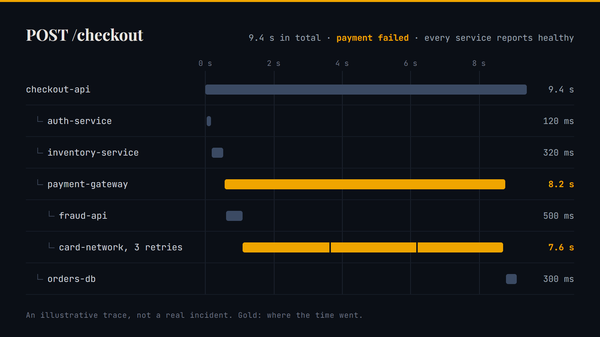
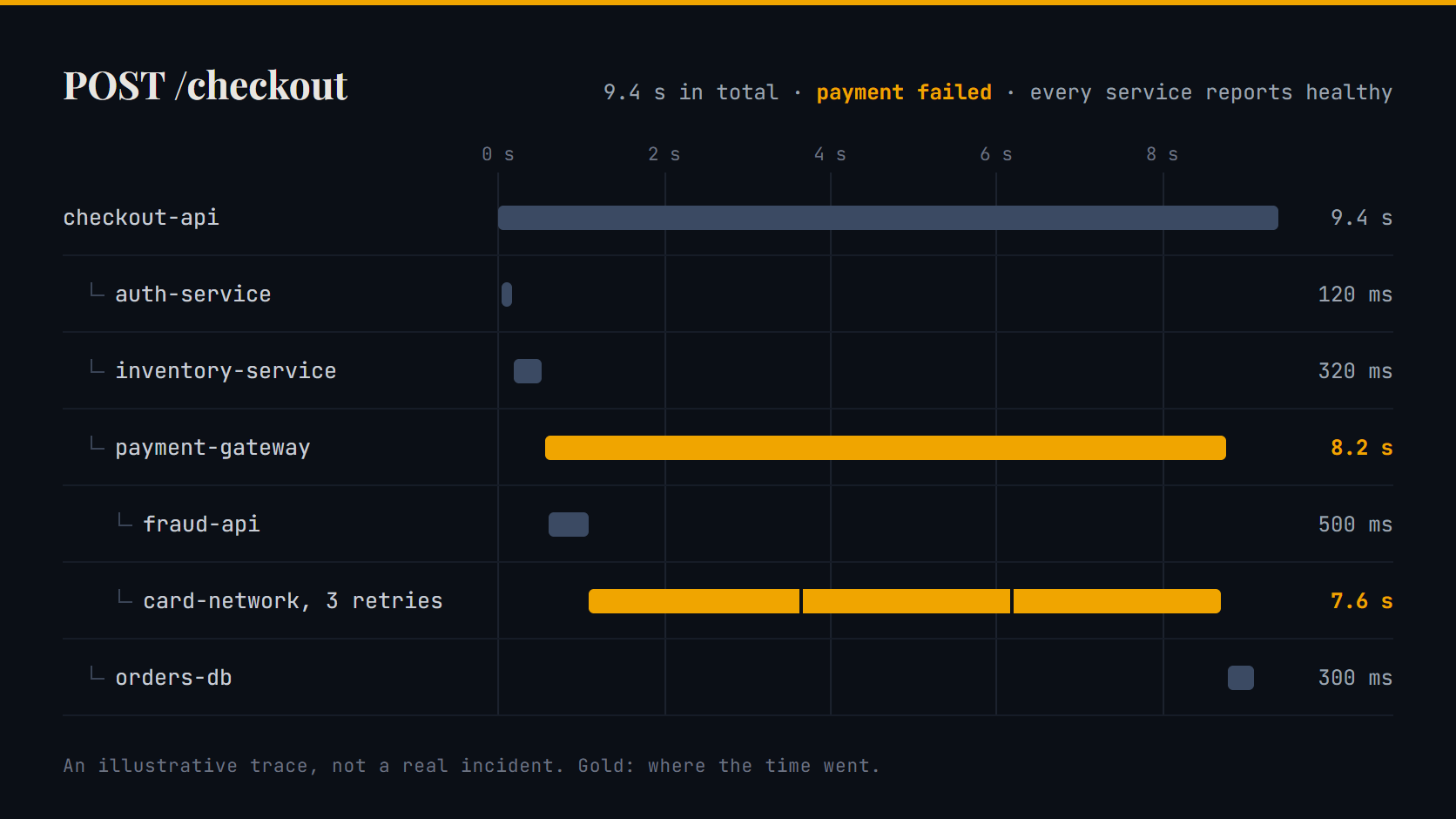
A checkout takes 9.4 seconds and fails while every server reports healthy. An engineer who can read the trace finds the 7.6 seconds lost to a card network within minutes; one who can only see that the servers are up is still refreshing a dashboard. As AI tools take over more of the repeated operations tasks, demand is gathering around people who understand a complete service: why it slowed down, how to prove the cause, and how to stop it happening again.
Our full article on aiiqlabs.com brings the 2026 figures together, each with its source:
- what the 2026 surveys say about AI and IT work, and what downtime costs;
- a readiness check to score your current role;
- what Splunk engineers are paid in India, and the market in the UAE, Saudi Arabia and Europe;
- which Splunk certifications to take first, including the three that became legacy in January 2026;
- a five-level career ladder from administrator to architect, and the path to Forward Deployed Engineer.
Read the full article on aiiqlabs.com →
Disclaimer
This post is an editorial summary for general information about careers in Splunk, observability and security operations. It is not career, financial, legal or immigration advice, and nothing in it is a recommendation to take any job, course or certification. Nothing in it guarantees a job, a pay rise or an overseas placement.
The failed checkout is an illustration, not a real incident. The figures are those given, with their sources, in the full article, as checked on 16 October 2026; they change and may be revised.
Product, company and project names, including Splunk, Cisco, Microsoft Sentinel, Grafana and Datadog, belong to their respective owners and are used here descriptively. Their mention is neither an endorsement by us of them, nor by them of us, and implies no affiliation or partnership.